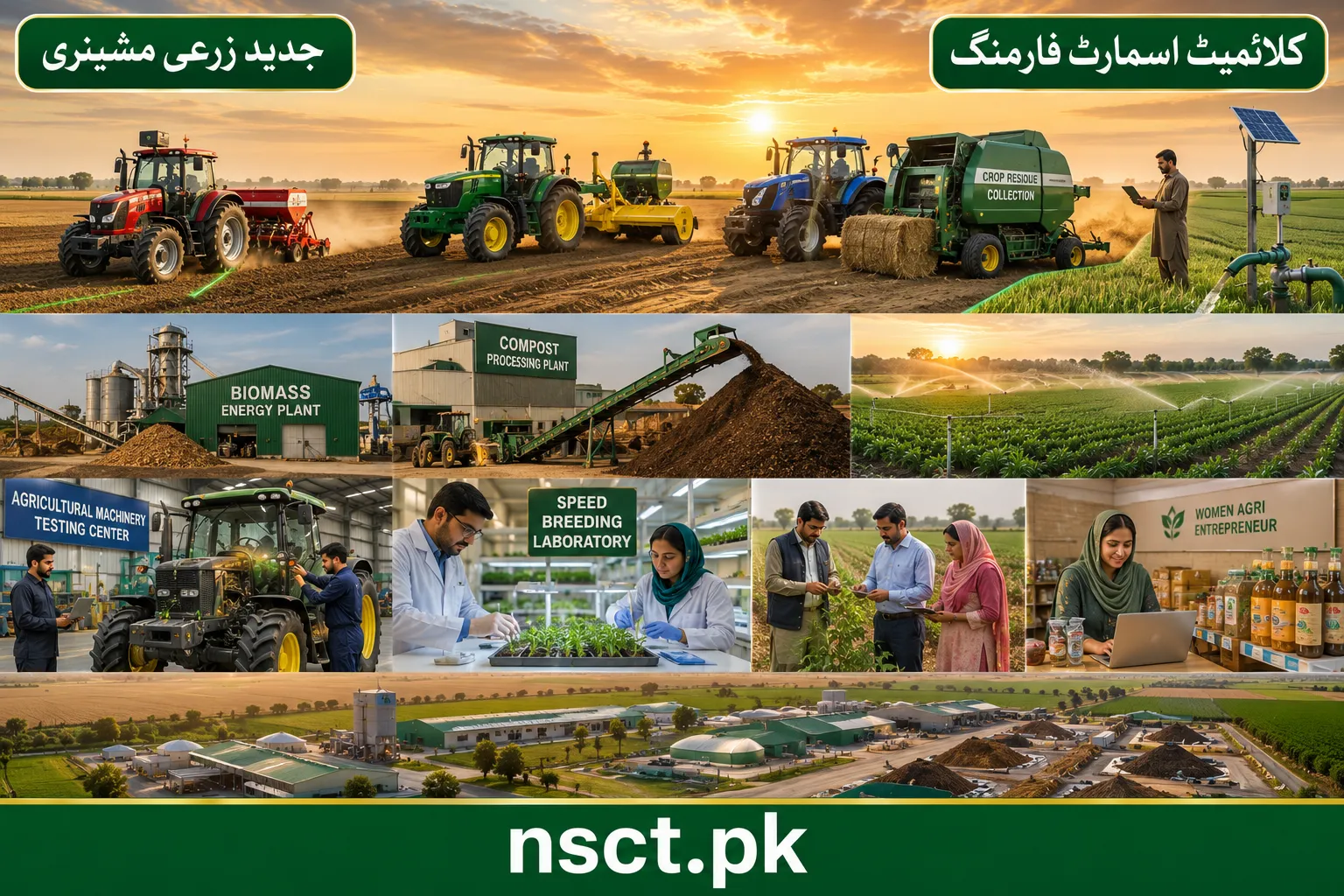
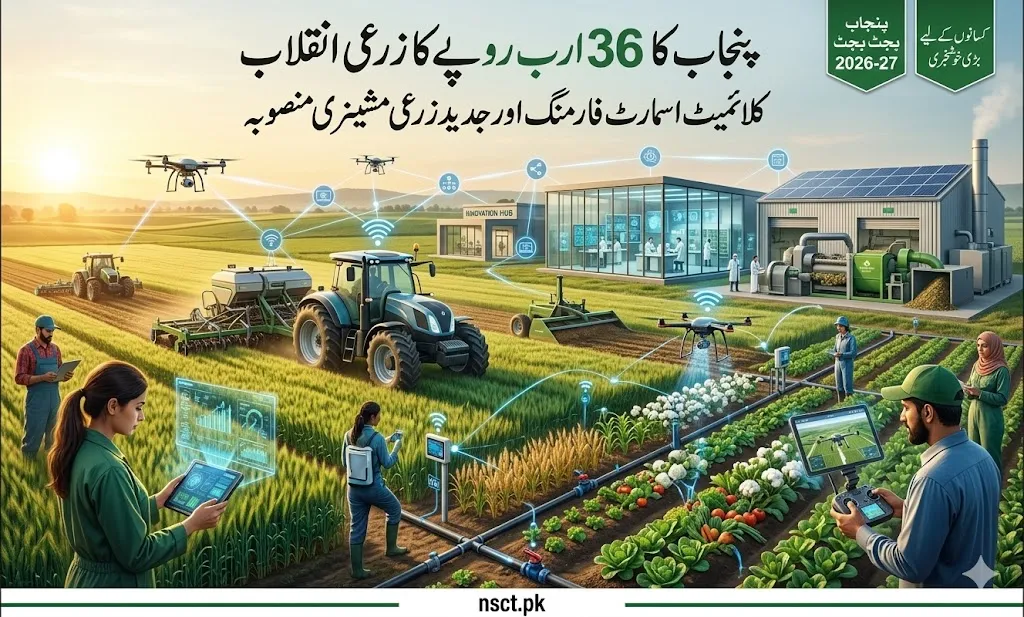
The Punjab Climate-Resilient and Low-Carbon Agriculture Mechanization Project 2026 receives Rs 36 billion in Punjab Budget 2026-27 to promote climate-smart farming, modern agricultural machinery, crop residue management, agricultural research, women’s empowerment, and sustainable agriculture across Punjab.
The Punjab Government has unveiled one of the most ambitious agricultural development initiatives in recent years through the Punjab Climate-Resilient and Low-Carbon Agriculture Mechanization Project 2026. With a substantial allocation of approximately Rs 36 billion under the Punjab Budget 2026-27, the project aims to modernize agriculture, strengthen climate resilience, reduce environmental pollution, and improve the livelihoods of farmers across the province.
Agriculture remains the backbone of Punjab’s economy, supporting millions of rural households and contributing significantly to food production in Pakistan. However, the sector faces increasing challenges from climate change, water shortages, rising production costs, declining soil fertility, and outdated farming methods. The Punjab Climate-Resilient and Low-Carbon Agriculture Mechanization Project seeks to address these issues through modern technology, research, sustainable farming practices, and innovative mechanization models.
Supported by the Asian Development Bank (ADB) and various international climate financing mechanisms, the project is expected to continue until 2031 and become a major driver of agricultural transformation in Punjab.

What is the Punjab Climate-Resilient and Low-Carbon Agriculture Mechanization Project?
The Punjab Climate-Resilient and Low-Carbon Agriculture Mechanization Project is a comprehensive agricultural modernization initiative designed to help farmers adopt climate-smart technologies while reducing the environmental impact of farming activities.
Unlike traditional subsidy-based agricultural programs, this initiative focuses on creating a sustainable agricultural ecosystem that combines:
- Modern farm mechanization
- Climate adaptation measures
- Agricultural research and innovation
- Crop residue management
- Women’s economic empowerment
- Private-sector participation
- Environmental protection
The project aims to increase productivity while reducing greenhouse gas emissions and promoting low-carbon agricultural practices throughout Punjab.

Why Punjab Needs Climate-Smart Agriculture
Punjab’s agriculture sector is increasingly vulnerable to climate-related risks. Farmers are experiencing unpredictable weather patterns, heatwaves, droughts, floods, and declining water availability.
Rising Climate Challenges
According to agricultural assessments, climate change may reduce crop productivity by 8–10 percent by 2040 if adaptation measures are not implemented. Key crops such as wheat, rice, and maize are particularly vulnerable to rising temperatures and water stress.

Major challenges include:
- Frequent drought conditions
- Reduced groundwater availability
- Heat stress on crops
- Extreme weather events
- Soil degradation
- Increased pest and disease pressure
The Punjab Climate-Resilient and Low-Carbon Agriculture Mechanization Project directly addresses these threats through technology-driven solutions.
Need for Agricultural Modernization
Many farmers continue to rely on traditional farming methods that result in lower productivity and higher costs.
Low mechanization levels often lead to:
- Delayed cultivation
- Higher labor costs
- Increased post-harvest losses
- Inefficient resource use
- Reduced profitability
Modern agricultural machinery and precision farming technologies can significantly improve farm efficiency while reducing environmental impacts.
Climate-Smart Farm Mechanization
One of the core components of the Punjab Climate-Resilient and Low-Carbon Agriculture Mechanization Project is improving access to advanced agricultural machinery.
Modern Agricultural Equipment
The project promotes the use of:
- Advanced tractors
- Precision seeders
- Modern harvesters
- Laser land levelers
- Smart irrigation equipment
- Resource-efficient farm machinery
- Precision agriculture technologies
These tools help farmers reduce production costs while increasing yields and resource efficiency.
Mechanization Service Provider Model
Instead of requiring every farmer to purchase expensive equipment, the project introduces innovative mechanization service networks.
Under this model:
- Private entrepreneurs purchase machinery.
- Farmers rent equipment when needed.
- Small farmers gain affordable access to advanced technology.
- Equipment utilization rates improve.
- Rural employment opportunities increase.
This approach ensures wider access to mechanization while minimizing financial barriers for small and medium-scale farmers.
Crop Residue Management and Air Pollution Reduction
One of the most significant environmental objectives of the project is reducing crop residue burning.
The Problem of Crop Burning
Every year, farmers burn rice straw and other crop residues after harvest to quickly prepare fields for the next crop. While this practice saves time, it creates severe environmental and health problems.
Crop residue burning contributes to:
- Smog formation
- Air pollution
- Carbon emissions
- Soil nutrient loss
- Respiratory diseases
Punjab’s major cities often experience severe air quality issues due to agricultural burning practices.
Circular Agriculture Model
The Punjab Climate-Resilient and Low-Carbon Agriculture Mechanization Project promotes a circular agriculture approach where crop residues are treated as valuable resources rather than waste.
Potential uses include:
- Compost production
- Biomass energy generation
- Organic fertilizers
- Livestock feed
- Industrial raw materials
This model creates additional income opportunities for farmers while reducing environmental damage.
Agricultural Research and Innovation Facilities
The project includes major investments in agricultural research infrastructure aimed at supporting long-term innovation.
Machinery Testing Center
A state-of-the-art Machinery Testing Center will be established to improve the quality and reliability of agricultural equipment.
The center will:
- Test agricultural machinery performance
- Develop quality standards
- Support local manufacturing
- Certify equipment safety
- Promote technological innovation
International Testing Standards
The project also aims to introduce internationally recognized testing protocols for agricultural machinery.
This will ensure:
- Better equipment quality
- Improved reliability
- Enhanced farmer confidence
- Increased competitiveness of local manufacturers
Speed Breeding Facility
The planned Speed Breeding Facility will accelerate crop development and agricultural research.
Key objectives include:
- Developing climate-resilient crops
- Improving drought tolerance
- Enhancing heat resistance
- Supporting food security
- Accelerating seed development
The facility is expected to play a vital role in preparing Punjab agriculture for future climate challenges.
Women’s Economic Empowerment in Agriculture
A unique aspect of the Punjab Climate-Resilient and Low-Carbon Agriculture Mechanization Project is its strong emphasis on women’s inclusion.
Just Transition Framework
As mechanization increases, traditional labor opportunities may decline, particularly for women involved in agricultural work.
To address this issue, the project adopts a “Just Transition” approach focused on ensuring women benefit from modernization.
Opportunities for Women
The project supports:
- Skills development programs
- Technical training
- Farm machinery operation training
- Rural entrepreneurship
- Women-led agribusinesses
- Alternative livelihood opportunities
These initiatives are designed to improve women’s participation in modern agricultural value chains.
Expected Beneficiaries
The Punjab Climate-Resilient and Low-Carbon Agriculture Mechanization Project is expected to directly improve the livelihoods of approximately 220,000 rural farming households.
Benefits for Farmers
Participating farmers may experience:
- Higher crop productivity
- Lower production costs
- Increased profitability
- Better climate resilience
- Access to modern technology
- Improved resource management
- Reduced environmental risks
The project focuses particularly on Punjab’s major agricultural districts where climate adaptation and mechanization needs are greatest.
Environmental Benefits of the Project
The environmental impact of the project extends beyond agricultural productivity.
Expected Environmental Outcomes
Key environmental benefits include:
- Reduced crop residue burning
- Lower greenhouse gas emissions
- Improved air quality
- Reduced smog incidents
- Better soil health
- Increased water-use efficiency
- Sustainable farming systems
These outcomes support Pakistan’s broader climate adaptation and environmental sustainability goals.
Financing Structure
The Punjab Climate-Resilient and Low-Carbon Agriculture Mechanization Project is financed through multiple sources.
Major Funding Sources
Funding support includes:
- Punjab Government allocations
- Asian Development Bank financing
- Climate-related international grants
- Technical assistance programs
Reports indicate that ADB has approved approximately US$120 million in concessional financing, along with additional grant support for climate-smart interventions and technology adoption.
Strategic Importance for Punjab Agriculture
The Punjab Climate-Resilient and Low-Carbon Agriculture Mechanization Project is not simply a machinery distribution program. It represents a comprehensive agricultural transformation strategy.
Key Strategic Components
The project integrates:
- Agricultural modernization
- Climate adaptation
- Environmental sustainability
- Research and innovation
- Women’s empowerment
- Private-sector involvement
- Rural economic development
By combining these elements into a single framework, Punjab is creating a more resilient and competitive agricultural sector capable of addressing future challenges.
Conclusion
The Punjab Climate-Resilient and Low-Carbon Agriculture Mechanization Project 2026 represents a major step toward sustainable agricultural development in Punjab. With a significant allocation of Rs 36 billion in the Punjab Budget 2026-27, the initiative aims to modernize farming practices, improve climate resilience, reduce environmental pollution, and strengthen rural livelihoods.
Through climate-smart mechanization, crop residue management, agricultural research, women’s empowerment, and innovative service delivery models, the project has the potential to transform Punjab’s agriculture sector over the coming years. If successfully implemented, it could improve productivity, support food security, reduce emissions, and enhance the quality of life for hundreds of thousands of farming families across the province.
FAQs
What is the Punjab Climate-Resilient and Low-Carbon Agriculture Mechanization Project?
It is a Rs 36 billion agricultural modernization initiative launched by the Punjab Government to promote climate-smart farming, sustainable agriculture, and modern mechanization.
How much funding has been allocated for the project?
Approximately Rs 36 billion has been allocated under the Punjab Budget 2026-27.
Who is supporting the project financially?
The project is supported by the Punjab Government, Asian Development Bank (ADB), international climate grants, and technical assistance programs.
How many farmers are expected to benefit?
Around 220,000 rural farming households are expected to benefit directly from the initiative.
What are the major objectives of the project?
The project focuses on farm mechanization, climate adaptation, crop residue management, agricultural research, environmental protection, and women’s economic empowerment.
How will the project reduce air pollution?
The project promotes crop residue collection and recycling instead of crop burning, helping reduce smog and improve air quality.
Will small farmers benefit from the project?
Yes. The mechanization service-provider model is specifically designed to help small and medium-sized farmers access advanced machinery at affordable rates.