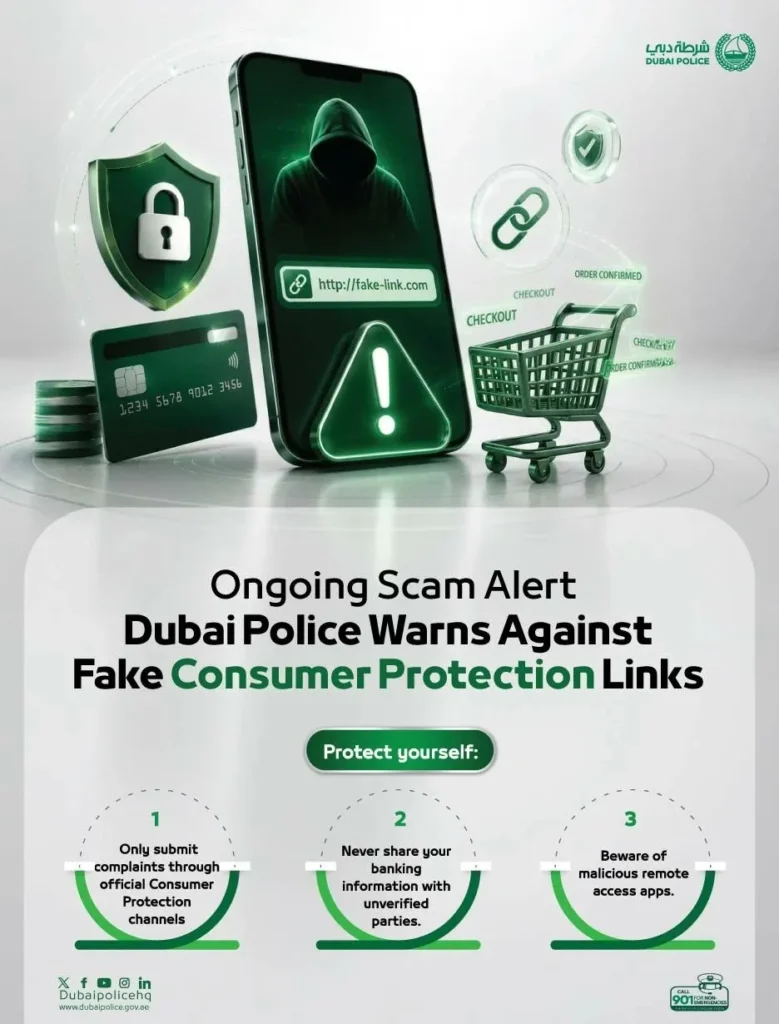
Dubai Police has issued a public warning about a growing fraud scheme in which criminals are pretending to represent Consumer Protection services to steal personal information, banking details, and money from victims.
Authorities have advised residents and consumers to remain careful when searching online for complaint services and to avoid clicking on suspicious links or downloading unknown applications. Fraudsters are reportedly creating fake websites that look similar to legitimate platforms to gain public trust.
The warning highlights the increasing risks of digital fraud, where criminals use advanced techniques such as fake websites, social engineering, and remote-access software to gain control of victims’ devices and financial accounts.
This article explains how the scam works, how criminals trick victims, and what steps people can take to protect themselves from online banking fraud.

Latest Dubai Police Fraud Alert
The Anti-Fraud Centre at the General Department of Criminal Investigation issued the warning after detecting repeated attempts by scammers targeting members of the public.
Dubai Police emphasized that consumers should use only official Consumer Protection channels when submitting complaints and should never share confidential banking information with unknown individuals.
The authorities also warned against downloading software requested by strangers, especially applications that allow remote access to computers or smartphones.

Such programs can give criminals the ability to monitor screens, access sensitive information, and perform unauthorized financial transactions.
How the Fake Consumer Protection Scam Works
The scam usually begins when a person searches online for a Consumer Protection platform to register a complaint.

Instead of reaching an official website, victims may be redirected to a fake website created by criminals. These websites are designed to appear legitimate and may use similar wording, logos, or layouts to confuse users.
Once on the fake platform, victims are asked to provide personal details such as:
- Full name
- Email address
- Phone number
- Complaint information
- Other personal details
Providing this information allows scammers to build a more convincing fraud attempt.
Fraudsters Use Complaint Details to Gain Trust
After collecting the victim’s information, scammers often make a phone call pretending to be representatives of Consumer Protection.
Because the caller already knows details about the submitted complaint, victims may believe the communication is genuine.
This technique is known as social engineering, where criminals manipulate people by creating trust and appearing knowledgeable about their situation.
Dubai Police explained that fraudsters use this false credibility to convince victims to follow further instructions.
Remote Access Software Used to Steal Banking Information
One of the most dangerous parts of this scam involves remote-access applications.
Fraudsters may ask victims to download software that allows another person to control or view their device remotely.Once installed, these applications can allow criminals to:
- View the victim’s screen
- Access confidential information
- Monitor online banking activity
- Capture sensitive details
- Make unauthorized transfers or purchases
Dubai Police warned that criminals can use these tools to take control of computers and smartphones by mirroring the device screen and accessing private information.
Why Remote Access Scams Are Dangerous
Remote access technology itself is not illegal. Many legitimate companies use such tools for technical support.
However, criminals misuse these applications by convincing victims to install them under false reasons.
A genuine government department, bank, or consumer service provider will not ask customers to install unknown remote-control software to verify complaints or solve banking issues.
Users should treat any such request as a major warning sign.
Signs That You May Be Facing a Fraud Attempt
Recognizing scam indicators early can help prevent financial losses.
Common warning signs include:
Suspicious Website Links
Fake websites often use unusual domain names, spelling mistakes, or addresses that do not match official government platforms.
Requests for Banking Information
No legitimate complaint service should ask for passwords, online banking credentials, or security codes.
Pressure to Act Quickly
Fraudsters often create urgency by claiming immediate action is required.
Requests to Install Applications
Unexpected requests to download remote-access software should be treated with extreme caution.
How to Protect Yourself From Online Banking Fraud
Dubai Police has encouraged residents to remain vigilant and follow safe digital practices.
People can reduce their risk by following these steps:
- Always access government services through official websites.
- Avoid opening links received from unknown sources.
- Do not download applications requested by strangers.
- Never share banking passwords or verification codes.
- Verify phone calls before providing any information.
- Report suspicious activities to authorities.
Using caution online is one of the most effective ways to prevent cybercrime.
Use Official Channels for Consumer Complaints
Authorities have reminded the public that complaints should only be submitted through verified Consumer Protection platforms.
Searching online without checking the authenticity of a website can expose users to phishing attempts.
Before entering personal information, users should confirm that they are visiting the correct official service platform.
Reporting Fraud Attempts in Dubai
Dubai Police has advised individuals who encounter suspicious calls, websites, or fraud attempts to report them immediately.
Residents can report cyber fraud incidents through the official eCrime platform or by contacting Dubai Police at 901.
Early reporting can help authorities investigate fraud networks and protect other potential victims.
Frequently Asked Questions (FAQs)
What is the fake Consumer Protection scam in Dubai?
It is a fraud scheme where criminals pretend to represent Consumer Protection services to steal personal information and banking details from victims.
How do scammers contact victims?
Scammers usually contact victims through phone calls after collecting information through fake websites.
Why do criminals create fake Consumer Protection websites?
They create fake platforms to collect personal information and make their later phone calls appear legitimate.
Can remote access software steal money from bank accounts?
Yes. If criminals gain access to a victim’s device, they may view sensitive information and perform unauthorized transactions.
Should I share my banking details with Consumer Protection representatives?
No. People should never share passwords, banking credentials, or security codes with unknown callers.
What should I do if someone asks me to install remote access software?
Do not install the software. End the conversation and verify the request through official channels.
How can I report a fraud attempt in Dubai?
Suspicious fraud attempts can be reported through the Dubai Police eCrime platform or by calling 901.
Are all Consumer Protection messages fake?
No. Legitimate services exist, but users should always confirm they are communicating through official channels.
Final Thoughts
The Dubai Police warning about fake Consumer Protection scams highlights the importance of digital awareness in today’s connected world. Fraudsters are constantly developing new methods to appear trustworthy, making it essential for people to verify information before sharing personal details.
Residents should avoid suspicious websites, refuse unexpected remote-access requests, and never provide banking information to unknown callers.
Using official government channels and reporting suspicious activity quickly can help protect individuals and prevent financial fraud. Staying alert remains one of the strongest defenses against cyber criminals.