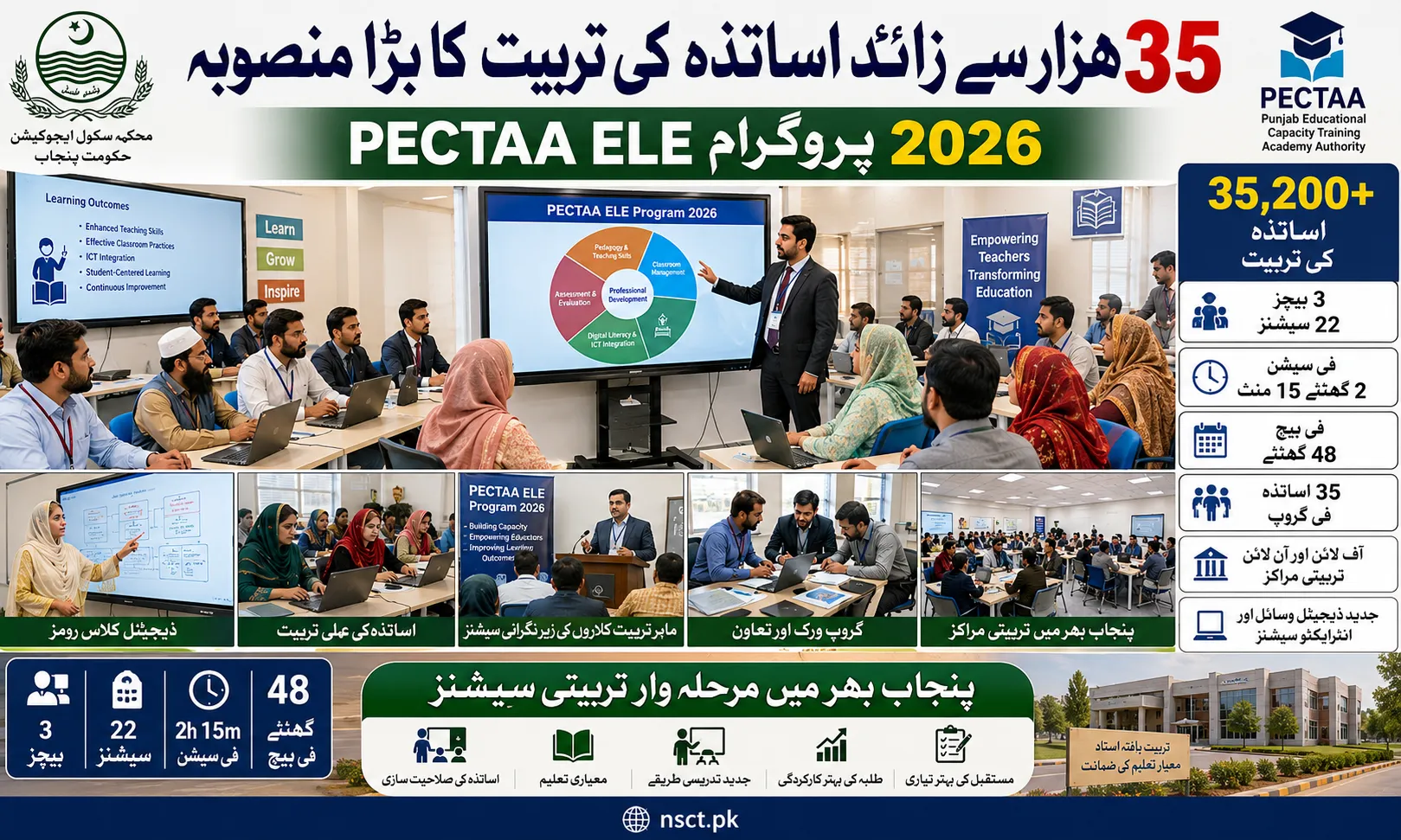
PECTAA ELE Program Capacity Planning 2026 includes training for 35,252 teachers across Punjab. Check batch-wise teacher distribution, tehsil-wise planning, instructor requirements, training groups, and room allocations.
The Punjab Education, Curriculum, Training and Assessment Authority (PECTAA) has finalized the capacity planning framework for the PECTAA ELE Program 2026, a large-scale professional development initiative designed to train more than 35,000 teachers across Punjab.
According to the latest planning data, the program will be conducted in three batches covering multiple districts and tehsils. The training model includes structured sessions, dedicated instructors, training rooms, and capacity management mechanisms to ensure effective delivery of educational content.
The initiative represents one of the largest teacher training programs in Punjab’s education sector and aims to strengthen teaching standards through systematic professional development.

PECTAA ELE Program Overview
The PECTAA ELE Program has been structured to accommodate thousands of teachers through a carefully designed training schedule.
Key Program Statistics
- Total Teachers: 35,252
- Total Batches: 3
- Sessions per Batch: 22
- Duration per Session: 2 Hours 15 Minutes
- Total Training Hours per Batch: Approximately 49.5 Hours
- Teachers per Group: 36
- Daily Training Slots: 3
The program is designed to maximize training capacity while maintaining quality instruction standards.
Batch-Wise Teacher Distribution
Teacher participation has been divided into three separate batches to ensure smooth implementation.

Batch 1 Statistics
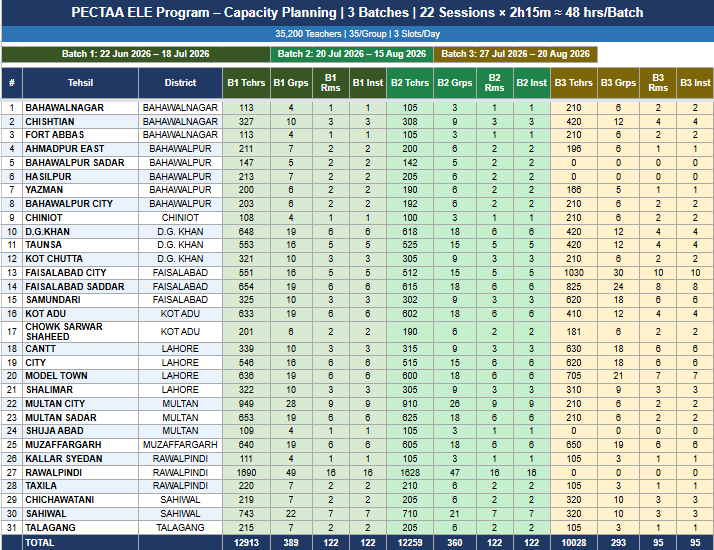
- Teachers: 12,913
- Groups: 389
- Rooms Required: 122
- Instructors Required: 122
Batch 1 covers a substantial portion of participating teachers and requires extensive logistical support.
Batch 2 Statistics
- Teachers: 12,259
- Groups: 360
- Rooms Required: 122
- Instructors Required: 122
Batch 2 follows a similar structure and continues the province-wide training effort.

Batch 3 Statistics
- Teachers: 10,028
- Groups: 293
- Rooms Required: 95
- Instructors Required: 95
Batch 3 completes the overall training cycle for all enrolled teachers.
Major Districts Participating in PECTAA ELE Program
The training initiative covers numerous districts across Punjab.
Lahore District
Lahore contributes one of the highest numbers of participating teachers through:
- Cantt
- City
- Model Town
- Shalimar
The district requires significant training infrastructure due to high teacher enrollment.
Rawalpindi District
Rawalpindi represents another major training hub.
Key participating tehsils include:
- Rawalpindi
- Taxila
- Kallar Syedan
Rawalpindi Tehsil alone contributes more than 1,600 teachers in Batch 1.
Faisalabad District
Faisalabad has one of the largest teacher populations in the program.
Participating tehsils include:
- Faisalabad City
- Faisalabad Saddar
- Samundari
The district requires multiple instructors and training rooms for successful implementation.
Multan District
Multan also plays a significant role in the training initiative.
Participating areas include:
- Multan City
- Multan Saddar
- Shujaabad
Training Capacity Planning Model
The program utilizes a structured capacity planning model.
Teacher Groups
Teachers are divided into manageable learning groups.
Benefits include:
- Improved interaction
- Better instructor engagement
- Enhanced learning outcomes
- Efficient classroom management
Room Allocation Strategy
Training rooms have been allocated according to group requirements.
The planning model ensures:
- Optimum room utilization
- Balanced teacher distribution
- Effective scheduling
Instructor Deployment
Each training room requires dedicated instructors.
This approach helps maintain:
- Training quality
- Consistent delivery
- Effective participant support
Tehsil-Wise Training Coverage
The PECTAA ELE Program covers a wide range of Punjab tehsils.
Southern Punjab Coverage
The program includes:
- Bahawalnagar
- Chishtian
- Fort Abbas
- Ahmadpur East
- Yazman
- D.G. Khan
- Taunsa
- Kot Chutta
- Muzaffargarh
- Multan
Central Punjab Coverage
Training centers have been planned for:
- Faisalabad City
- Faisalabad Saddar
- Samundari
- Lahore City
- Model Town
- Shalimar
Northern Punjab Coverage
Key northern districts include:
- Rawalpindi
- Taxila
- Kallar Syedan
- Talagang
This broad geographical coverage ensures representation from all major regions of Punjab.
Importance of Teacher Training Programs
Teacher professional development remains essential for improving educational outcomes.
Benefits for Teachers
- Enhanced teaching methodologies
- Updated instructional strategies
- Better classroom management
- Professional growth opportunities
Benefits for Students
- Improved learning experiences
- Higher educational standards
- Better classroom engagement
- Stronger academic performance
Benefits for Education System
- Standardized teaching practices
- Improved quality assurance
- Strengthened educational capacity
- Long-term institutional development
Resource Requirements for PECTAA ELE Program
The program requires substantial logistical and human resources.
Infrastructure Requirements
- 339 Total Training Rooms
- Multiple Training Centers
- Digital Learning Resources
- Administrative Support Systems
Human Resource Requirements
- 339 Instructors
- Program Coordinators
- Technical Support Teams
- Monitoring and Evaluation Staff
These resources are critical for successful implementation.
Expected Outcomes
The PECTAA ELE Program aims to strengthen teacher capacity across Punjab.
Expected outcomes include:
- Improved instructional quality
- Enhanced teacher competencies
- Better student learning outcomes
- Stronger educational institutions
- Sustainable professional development systems
The program is expected to contribute significantly to Punjab’s education reform agenda.
Conclusion
The PECTAA ELE Program Capacity Planning 2026 represents one of Punjab’s largest teacher development initiatives, targeting more than 35,000 teachers through a structured three-batch training model. With hundreds of training groups, instructors, and dedicated facilities, the program demonstrates a comprehensive commitment to improving educational quality across the province.
Successful implementation of this initiative can help strengthen teacher effectiveness, improve classroom instruction, and support long-term educational development throughout Punjab.
FAQs
What is the PECTAA ELE Program 2026?
The PECTAA ELE Program is a large-scale teacher training initiative designed to improve professional competencies of teachers across Punjab.
How many teachers will participate in the program?
A total of 35,252 teachers are planned to participate.
How many batches are included in the training plan?
The training will be conducted in three batches.
How many sessions are included in each batch?
Each batch consists of 22 training sessions.
How many instructors are required for the program?
A total of 339 instructors are required across all batches.
Which districts are included in the training plan?
Districts include Lahore, Rawalpindi, Faisalabad, Multan, Bahawalpur, D.G. Khan, Muzaffargarh, Sahiwal, and others.