The Punjab government has initiated a massive water metering project across 41 cities. Learn how this step aims to ensure fair usage, improve water management, and tackle water scarcity.
Punjab Launches Mega Water Meter Project Across 41 Cities to Revolutionize Water Management
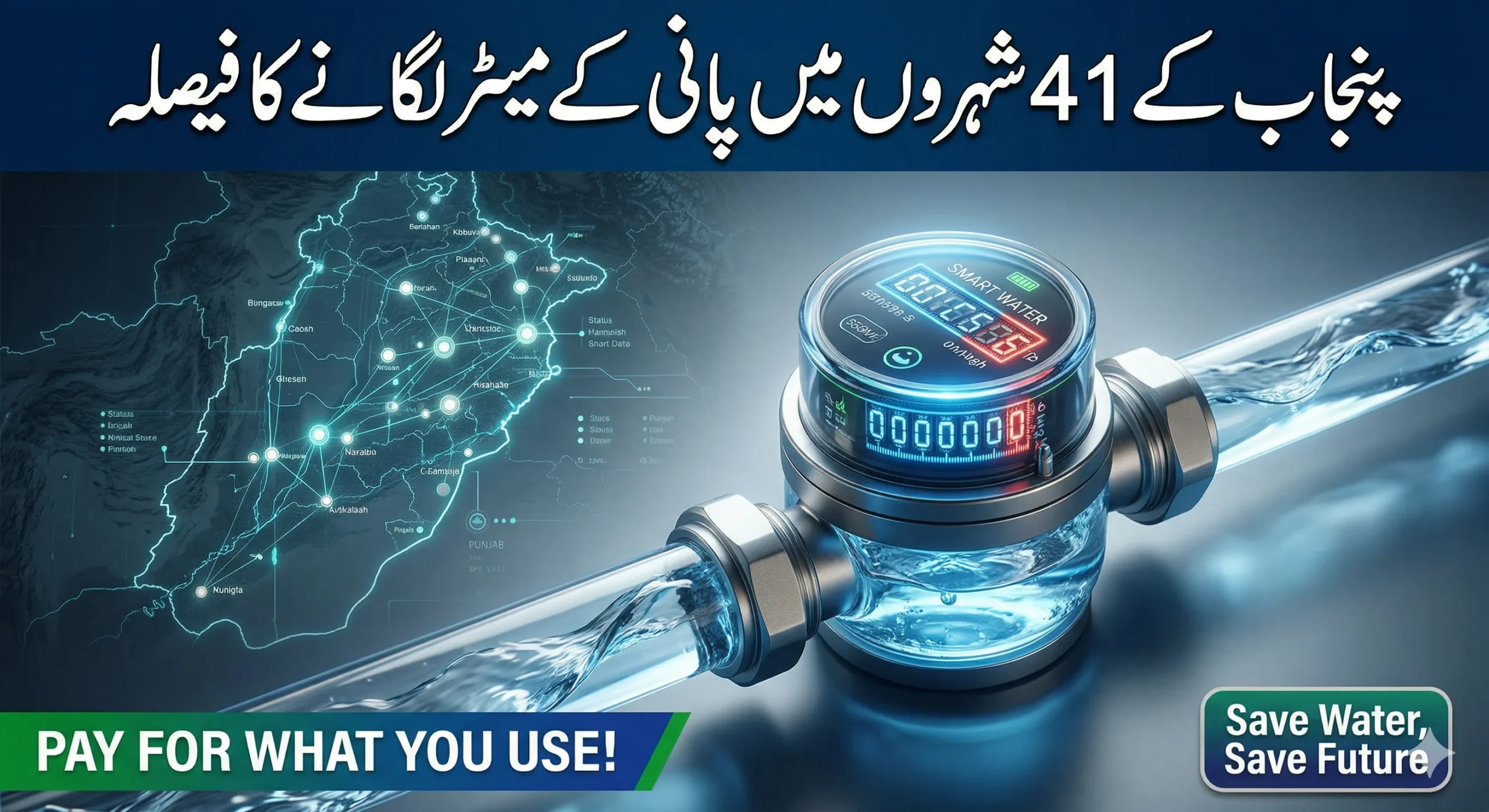
In a major step toward sustainability and resource conservation, the Government of Punjab has officially launched a province-wide Water Meter Project, targeting 41 major cities. This massive infrastructural initiative is designed to overhaul the existing water distribution system, combat extreme water wastage, and introduce a highly transparent billing system based on actual consumption.
As water scarcity becomes an increasingly critical issue across Pakistan, this proactive measure aims to ensure fair usage and secure clean drinking water for future generations.
The Scope: Expanding Across 41 Cities
Historically, water charges in most parts of the province have been calculated on a flat-rate basis, regardless of how much water a household or commercial unit actually consumes. This outdated model has led to rampant water wastage.

By rolling out the installation of modern water meters across 41 key cities in Punjab, the government is replacing the flat-rate system with a precise, usage-based model. This will cover both domestic and commercial consumers, ensuring that the burden of water infrastructure maintenance is shared fairly.
Core Objectives of the Water Metering Project
The deployment of these water meters is not just about revenue collection; it is a comprehensive strategy to address several structural issues in urban water management:
1. Ensuring Fair Usage and Billing (“Pay for What You Use”)
The most immediate benefit for the average citizen is fairness. Under the new system, consumers who use water carefully and responsibly will see significantly lower bills compared to those who waste it. This “pay-as-you-use” model naturally incentivizes households and businesses to fix leaking taps and avoid unnecessary water usage (such as washing cars with open hoses).

2. Drastic Reduction in Water Wastage
When water has a direct cost tied to volume, consumer behavior changes instantly. International studies show that the introduction of water meters can reduce domestic water consumption by 15% to 20% almost immediately.
3. Identifying Leaks and Non-Revenue Water (NRW)
A massive percentage of pumped water in Punjab’s cities is lost underground due to broken pipelines before it even reaches homes—a phenomenon known as Non-Revenue Water (NRW). Smart metering will help municipal authorities track exactly how much water is pumped versus how much is consumed, allowing them to pinpoint the exact locations of major underground leaks.

A Step Toward Environmental Sustainability
Pakistan is currently listed among the top water-stressed countries in the world. The underground water table in major cities like Lahore, Faisalabad, and Multan has been depleting at an alarming rate over the last decade.
By taking control of water management through this technological upgrade, the Punjab government is taking a necessary step to halt the rapid depletion of aquifers. The data collected from these 41 cities will enable the government to plan better dams, reservoirs, and water recycling plants in the coming years.
What Citizens Need to Know
- Installation Phase: The installation will be carried out in phases by the respective Water and Sanitation Agencies (WASA) and local municipal corporations.
- Transition Period: Citizens will be guided on how to read their new meters and understand their usage patterns before the formal volume-based billing goes into full effect.
- Maintenance: The government will initially oversee the calibration and maintenance of these meters to ensure accurate readings.
This project is a wake-up call and a positive step forward. Water is a finite resource, and treating it with the value it deserves is the only way to ensure our cities remain livable in the decades to come.
Here is a highly relevant and SEO-optimized Frequently Asked Questions (FAQs) section that you can add to the end of your article. These questions address the most common concerns citizens will have regarding the new system.
Frequently Asked Questions (FAQs)
1. How will the new water meter billing system work?
Currently, most consumers pay a fixed monthly flat rate regardless of how much water they use. The new system will introduce volumetric billing, meaning you will only be charged for the exact amount of water you consume, similar to your electricity or gas bill.
2. Will my monthly water bill increase after the meter is installed?
Not necessarily. If you use water responsibly and fix household leaks, your bill could actually decrease compared to the traditional flat rate. However, consumers who waste water (e.g., leaving taps running, washing cars daily with hoses) will see a significant increase in their bills.
3. Who will bear the cost of installing the water meters?
The installation process will be managed by the respective Water and Sanitation Agencies (WASA) and local municipal authorities. The government will outline the specific cost-sharing or subsidized installation mechanisms for residential and commercial users during the rollout phases in each city.
4. Are these meters only for commercial areas or for homes as well?
The Punjab government’s project covers both domestic (residential) and commercial properties. The goal is to bring all water consumers under a unified, fair, and transparent monitoring system across the targeted 41 cities.
5. How will I know if my city is included in this project?
The project targets 41 major cities across Punjab. Local municipal corporations and WASA offices will run awareness campaigns and issue public notices in your specific city before the installation teams arrive in your neighborhood.
6. What happens if my water meter gets damaged or stops working?
Consumers will be required to report any malfunctions to their local water authority immediately. The government or relevant agency will provide maintenance teams to inspect, repair, or replace faulty meters to ensure accurate billing continues without disruption.